

Table of Content
Beyond the Rating: How Calibration Normalizes Compensation and Builds Trust
The most dangerous moment in the employee lifecycle is not the termination meeting. It is the moment bonus checks hit the bank account.
If a high performer in Engineering gets a 5% raise, but a mediocre performer in Sales gets a 10% raise simply because their manager is an easy grader, you have created a Pay Equity crisis. This leads to attrition, legal risk, and a toxic culture of manager shopping.
The solution is not to remove discretion.
The solution is Performance Calibration.
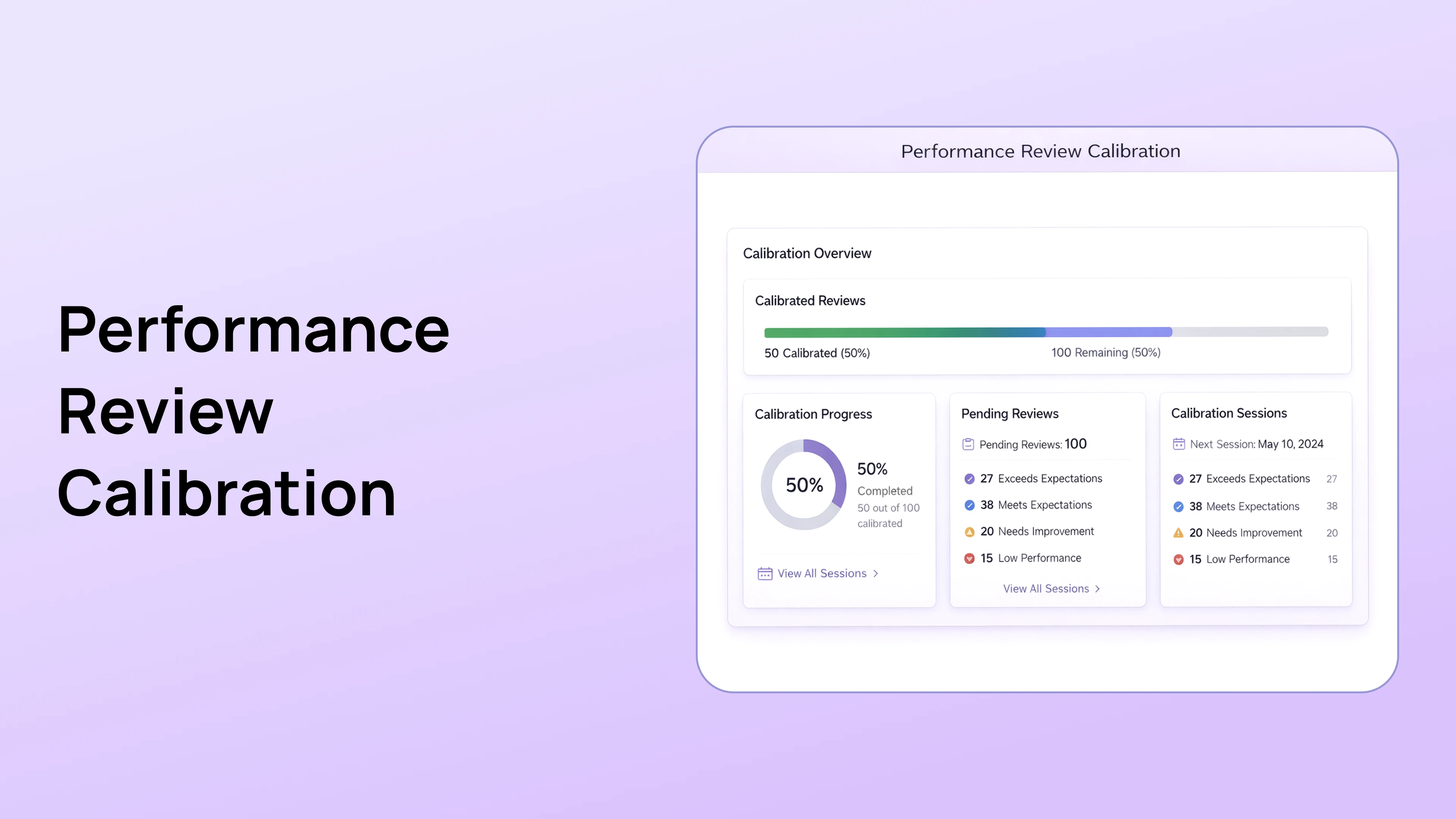
Most mid-market companies view calibration as a painful week of arguing over spreadsheets. In the PerformSpark Strategy, we redefine it. Calibration is not about forcing a curve. It is about Normalization. It ensures that an Exceeds Expectations rating means the exact same thing in Marketing as it does in Finance.
This guide explains how to use data, specifically the Golden Thread of goals and check-ins, to run calibration sessions that build trust rather than destroy it.
What is performance calibration?
Performance Calibration is the systematic process of discussing and adjusting employee ratings across different managers to ensure consistency and fairness.
The Old Way (Forced Ranking)
- Philosophy: We must fire the bottom 10%.
- Method: Arbitrarily fitting people into a bell curve regardless of actual performance.
- Result: Fear, competition, and shark behavior.
The New Way (Normalization)
- Philosophy: We must ensure fairness.
- Method: Using data to verify if a manager's subjective rating matches the objective reality of goal achievement.
- Result: Trust and defensible compensation data.
Why do uncalibrated reviews lead to unfair pay?
Without calibration, compensation is based on Manager Bias rather than Employee Performance. Two specific phenomena cause this inequity.
What is the Idiosyncratic Rater Effect?
Research reveals that over 60% of a performance rating is a reflection of the rater, not the ratee. This is the Idiosyncratic Rater Effect.
The Problem:
Some managers are Hard Graders who never give a 5/5. Others are Soft Graders who fear conflict and rate everyone high.
The Cost:
If you tie bonuses directly to these raw ratings, you are penalizing employees who work for rigorous leaders.
How does Rating Drift drain the budget?
Rating Drift occurs when average ratings creep higher year over year without a corresponding increase in business revenue.
The Scenario:
A manager wants to be liked, so they bump a Meets Expectations (3) to an Exceeds (4).
The Impact:
If 40% of your company drifts into the Exceeds category, your bonus pool is mathematically insolvent. You either blow the budget or you have to slash the payout per person, which angers everyone.
How does the 9-Box Grid visualize talent density?
To calibrate effectively, you need to visualize the data. You cannot see trends in a vertical list of 500 names. You need a 9-Box Grid.
The X and Y Axis
The 9-Box plots employees on two dimensions:
- Performance (X-Axis): What did they do? (Derived from Goal Alignment).
- Potential (Y-Axis): What can they do next? (Derived from competency assessments).
The Calibration Move
During the session, leaders drag and drop employees into the appropriate box.
The Insight:
Why is Sarah in the Top Talent box if she missed 50% of her goals?
The Action:
The group debates the discrepancy and moves her to the Enigma box (High Potential, Low Performance), triggering a different coaching plan.
How does TrAI detect bias during calibration?
In a manual spreadsheet calibration, you rely on human memory to spot bias. This is unreliable. TrAI (our ethical intelligence engine) acts as an impartial auditor in the room.
How does TrAI flag anomalies?
As managers submit their proposed ratings, TrAI analyzes the data for statistical anomalies.
The Gender/Race Check:
Warning: This manager has rated 80% of male reports as High Potential but only 20% of female reports, despite equal goal achievement rates.
The Recency Check:
Warning: This Exceeds rating contradicts the employee's Goal Completion rate of 60%. Please justify.
By flagging these issues before the raises are finalized, TrAI protects the company from legal exposure and ensures the Golden Thread of data remains intact.
How to run a data-backed calibration session?
Stop printing paper packets. Run your calibration on live data.
1. The Pre-Read (Asynchronous)
Managers submit ratings two weeks before the meeting. TrAI aggregates the distribution curve.
2. The Conflict View (The Meeting)
Do not waste time discussing the 80% of employees everyone agrees on. Use the software to filter for Rating Discrepancies (e.g., High Goal Achievement but Low Rating). Spend your expensive meeting time debating these edge cases.
3. The Write-Back (The Action)
When a decision is made to adjust a rating, the change is instantly written back to the Performance Review module. The manager receives a notification: During calibration, this rating was adjusted. Here are the talking points for your feedback conversation.
Conclusion
For too long, Goal Setting has been treated as a January chore. There has been a box to check so HR stops nagging.
But when you treat Goals as Telemetry, when you use TrAI to ensure quality, the ATA Model to ensure tracking, and Calibration to ensure fair pay, you transform the entire function of HR.
You stop being the Police who enforces deadlines. You become the Architect who aligns the workforce.
Don't settle for static text on a page. Demand a living ecosystem.
Book a Consultative Demo and see how PerformSpark turns Calibration into your competitive advantage
Beyond the Rating: How Calibration Normalizes Compensation and Builds Trust
The most dangerous moment in the employee lifecycle is not the termination meeting. It is the moment bonus checks hit the bank account.
If a high performer in Engineering gets a 5% raise, but a mediocre performer in Sales gets a 10% raise simply because their manager is an easy grader, you have created a Pay Equity crisis. This leads to attrition, legal risk, and a toxic culture of manager shopping.
The solution is not to remove discretion.
The solution is Performance Calibration.
Most mid-market companies view calibration as a painful week of arguing over spreadsheets. In the PerformSpark Strategy, we redefine it. Calibration is not about forcing a curve. It is about Normalization. It ensures that an Exceeds Expectations rating means the exact same thing in Marketing as it does in Finance.
This guide explains how to use data, specifically the Golden Thread of goals and check-ins, to run calibration sessions that build trust rather than destroy it.
What is performance calibration?
Performance Calibration is the systematic process of discussing and adjusting employee ratings across different managers to ensure consistency and fairness.
The Old Way (Forced Ranking)
- Philosophy: We must fire the bottom 10%.
- Method: Arbitrarily fitting people into a bell curve regardless of actual performance.
- Result: Fear, competition, and shark behavior.
The New Way (Normalization)
- Philosophy: We must ensure fairness.
- Method: Using data to verify if a manager's subjective rating matches the objective reality of goal achievement.
- Result: Trust and defensible compensation data.
Why do uncalibrated reviews lead to unfair pay?
Without calibration, compensation is based on Manager Bias rather than Employee Performance. Two specific phenomena cause this inequity.
What is the Idiosyncratic Rater Effect?
Research reveals that over 60% of a performance rating is a reflection of the rater, not the ratee. This is the Idiosyncratic Rater Effect.
The Problem:
Some managers are Hard Graders who never give a 5/5. Others are Soft Graders who fear conflict and rate everyone high.
The Cost:
If you tie bonuses directly to these raw ratings, you are penalizing employees who work for rigorous leaders.
How does Rating Drift drain the budget?
Rating Drift occurs when average ratings creep higher year over year without a corresponding increase in business revenue.
The Scenario:
A manager wants to be liked, so they bump a Meets Expectations (3) to an Exceeds (4).
The Impact:
If 40% of your company drifts into the Exceeds category, your bonus pool is mathematically insolvent. You either blow the budget or you have to slash the payout per person, which angers everyone.
How does the 9-Box Grid visualize talent density?
To calibrate effectively, you need to visualize the data. You cannot see trends in a vertical list of 500 names. You need a 9-Box Grid.
The X and Y Axis
The 9-Box plots employees on two dimensions:
- Performance (X-Axis): What did they do? (Derived from Goal Alignment).
- Potential (Y-Axis): What can they do next? (Derived from competency assessments).
The Calibration Move
During the session, leaders drag and drop employees into the appropriate box.
The Insight:
Why is Sarah in the Top Talent box if she missed 50% of her goals?
The Action:
The group debates the discrepancy and moves her to the Enigma box (High Potential, Low Performance), triggering a different coaching plan.
How does TrAI detect bias during calibration?
In a manual spreadsheet calibration, you rely on human memory to spot bias. This is unreliable. TrAI (our ethical intelligence engine) acts as an impartial auditor in the room.
How does TrAI flag anomalies?
As managers submit their proposed ratings, TrAI analyzes the data for statistical anomalies.
The Gender/Race Check:
Warning: This manager has rated 80% of male reports as High Potential but only 20% of female reports, despite equal goal achievement rates.
The Recency Check:
Warning: This Exceeds rating contradicts the employee's Goal Completion rate of 60%. Please justify.
By flagging these issues before the raises are finalized, TrAI protects the company from legal exposure and ensures the Golden Thread of data remains intact.
How to run a data-backed calibration session?
Stop printing paper packets. Run your calibration on live data.
1. The Pre-Read (Asynchronous)
Managers submit ratings two weeks before the meeting. TrAI aggregates the distribution curve.
2. The Conflict View (The Meeting)
Do not waste time discussing the 80% of employees everyone agrees on. Use the software to filter for Rating Discrepancies (e.g., High Goal Achievement but Low Rating). Spend your expensive meeting time debating these edge cases.
3. The Write-Back (The Action)
When a decision is made to adjust a rating, the change is instantly written back to the Performance Review module. The manager receives a notification: During calibration, this rating was adjusted. Here are the talking points for your feedback conversation.
Conclusion
For too long, Goal Setting has been treated as a January chore. There has been a box to check so HR stops nagging.
But when you treat Goals as Telemetry, when you use TrAI to ensure quality, the ATA Model to ensure tracking, and Calibration to ensure fair pay, you transform the entire function of HR.
You stop being the Police who enforces deadlines. You become the Architect who aligns the workforce.
Don't settle for static text on a page. Demand a living ecosystem.
Book a Consultative Demo and see how PerformSpark turns Calibration into your competitive advantage




.svg)

.svg)
.svg)