

Table of Content
Why Spreadsheet Reviews Break at Scale: The Case for Automated, High-Velocity Cycles
Startups run on spreadsheets. When you are a founding team of 10 people, a simple shared document is the perfect tool for performance reviews. It is free, completely flexible, and requires zero training to use. At this stage, buying software feels like unnecessary overhead.
But every growing company eventually hits a specific ceiling. We call this the Breaking Point.
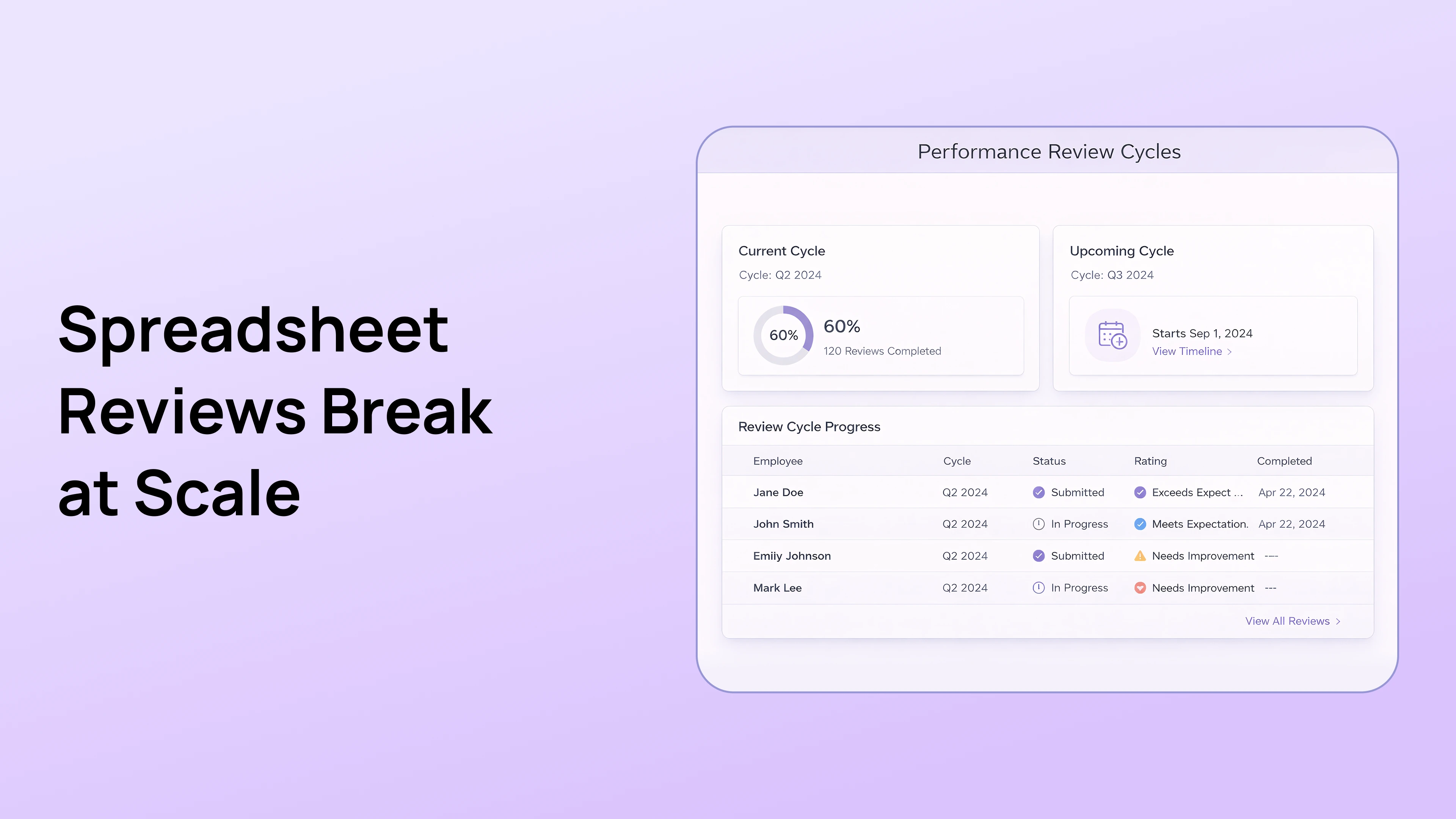
Usually occurring between 50 and 75 employees, the spreadsheet stops being an agile tool and transforms into a significant liability. HR leaders in the mid-market often cling to manual processes far past this breaking point because they fear the perceived complexity or cost of implementation. They do not realize that the hidden costs of manual administration, version control errors, and data silos are far more expensive than any software license fee.
This comprehensive guide explains exactly why manual reviews fail at scale and presents the business case for switching to Automated, High-Velocity Cycles. We will look at how the PerformSpark Strategy moves your HR team from chasing paperwork to driving strategic performance.
When does a manual review process break?
The collapse of a manual performance process is rarely a sudden explosion. It is a slow, suffocating decline of the HR function's efficiency. As headcount grows, the complexity of managing reviews via Excel or Google Sheets grows exponentially, not linearly.
What is the Version Control Trap?
In a 100-person company, a typical review cycle generates a minimum of 200 distinct documents. You have 100 self-evaluations and 100 manager evaluations. If you use spreadsheets, that means you have 200 distinct files floating in email inboxes, local hard drives, or shared cloud folders.
HR administrators often spend 40 to 60 hours per cycle just acting as traffic controllers. They must ensure every manager is using the current year's template. They must manually verify that every file has been submitted. They must rename files that were saved incorrectly. This is low-value administrative work that burns out talented People Ops professionals.
What are the hidden privacy risks?
Spreadsheets are notoriously difficult to secure in a collaborative environment. To allow a manager to see their direct reports' data, you often have to share a folder or a master sheet.
One wrong permission setting can expose sensitive compensation data or private peer feedback to the entire company.
In a manual system, there is no audit trail. If a cell is deleted or a rating is changed, there is no record of who did it or when. This lack of data integrity creates a massive compliance risk, particularly if a performance score is ever used as evidence in a wrongful termination lawsuit.
Why are data silos dangerous?
The biggest failure of the spreadsheet method is strategic. Data in a spreadsheet is dead data. It lives on an island, disconnected from the rest of the employee lifecycle.
You cannot easily cross-reference a rating in a spreadsheet with the Goal Achievement data stored in a different system. You cannot pull manual ratings into a Performance Calibration session without hours of manual formatting and data cleaning. This disconnection forces leaders to make compensation decisions based on intuition rather than holistic evidence.
What is a High-Velocity Review Cycle?
The solution to the spreadsheet problem is not just digitizing the form. It is changing the philosophy of the review itself. We advocate moving from stagnant annual reviews to High-Velocity Cycles.
A High-Velocity Cycle is faster, lighter, and more frequent. It is designed for the modern workforce that demands continuous feedback rather than a once-a-year judgment day.
The Traditional Cycle (Manual)
- Frequency: Once a year.
- Duration: 6 to 8 weeks to complete from launch to signature.
- Focus: Compliance, form filling, and risk mitigation.
- Manager Experience: High friction and high anxiety.
- Outcome: Exhaustion and outdated data.
The High-Velocity Cycle (Automated)
- Frequency: Quarterly or Bi-annual.
- Duration: 10 to 14 days to complete.
- Focus: Feedback, coaching, and future growth.
- Manager Experience: Low friction and guided prompts.
- Outcome: Actionable real-time insights.
The PerformSpark Difference:
We enable High-Velocity Cycles by removing the friction of the blank page. Because we integrate Check-in Data directly into the review workflow, the manager does not have to remember what happened 9 months ago. The review practically writes itself based on the last 12 weeks of activity.
How does automation solve the "Chasing" problem?
Ask any HR administrator what they hate most about performance reviews and they will give you the same answer: Chasing managers to finish their forms.
In a manual system, HR is forced to play the role of the Police. You send nagging emails on Monday. You slack people on Wednesday. You chase executives down in the hallway on Friday. This dynamic damages the relationship between HR and the rest of the business. You become the villain who enforces deadlines rather than the partner who builds culture.
The Nudge Engine
Automation changes this dynamic completely. The software becomes the bad guy so you do not have to be. PerformSpark's Nudge Engine handles the logistics of accountability.
- Smart Notifications: The system sends automated, personalized reminders via Slack, MS Teams, or email based on the specific deadline status of the user.
- Escalation Rules: You can configure the system to escalate issues automatically. If a manager misses a deadline by 3 days, the system can trigger a notification to their department head or VP, prompting internal accountability without HR intervention.
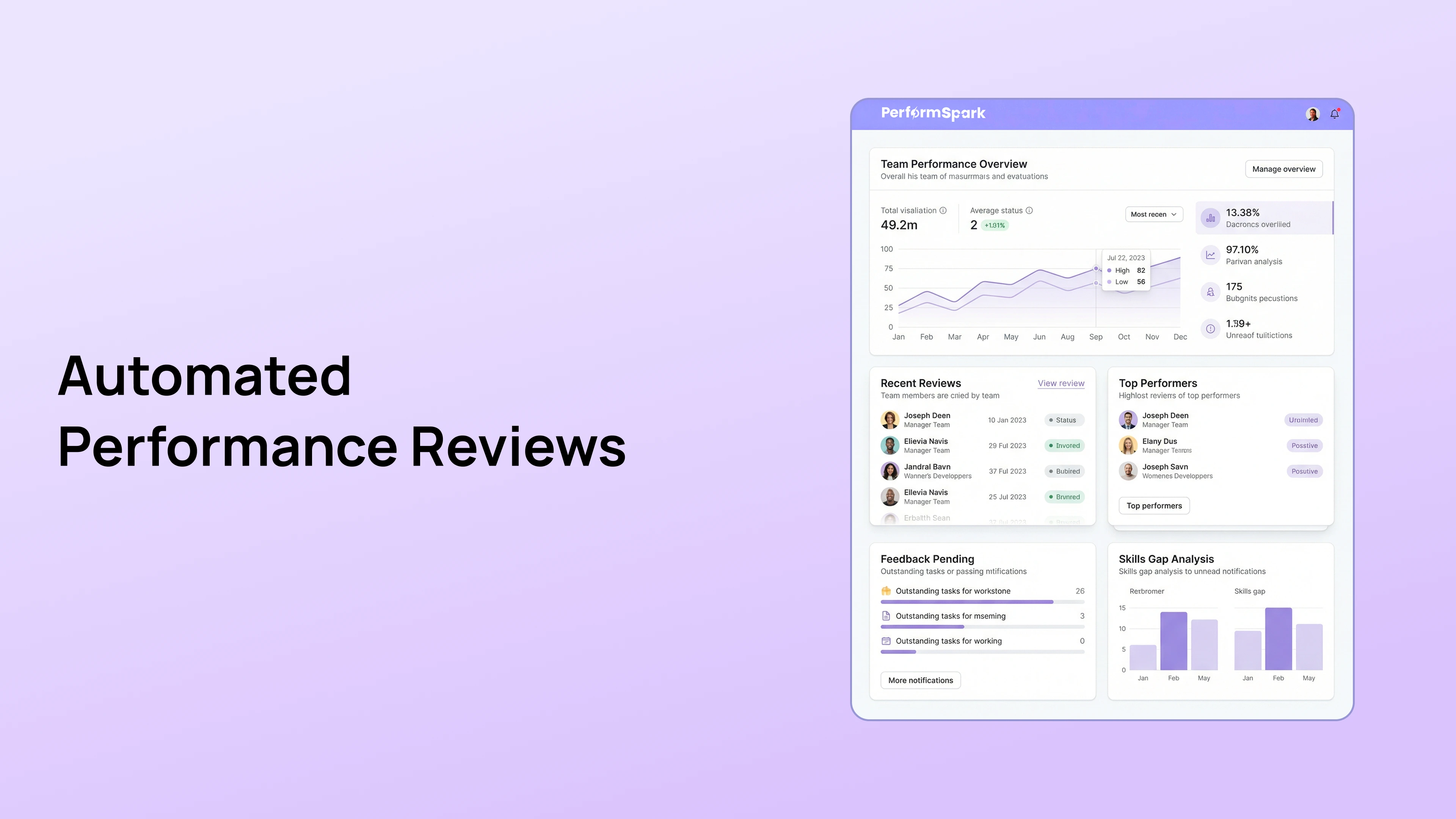
- Progress Dashboards: Instead of checking 50 different spreadsheets to see who is done, HR leaders have a live dashboard. You can see completion rates by department instantly (e.g., Sales is 90% complete, Engineering is 40% complete), allowing you to target your follow-up efforts where they are actually needed.
Why is disconnected data dangerous for decision making?
When you use spreadsheets, your performance data is isolated. It is a snapshot in time that has no context. This lack of context leads to bad decision-making, particularly when it comes to compensation and promotions.
Can you calibrate without integrated data?
We discussed the critical importance of fairness in our guide on Performance Calibration. To run an effective 9-Box calibration session, you need to plot Performance against Potential for every employee.
The Manual Way:
To do this in Excel, an HR analyst must manually export data from 50 different sheets, normalize the scales, and build a pivot table. If a VP decides to change a rating during the calibration meeting, the analyst must update the master sheet and then remember to go back and update the original review form. Human error is inevitable in this web of versions.
The Automated Way:
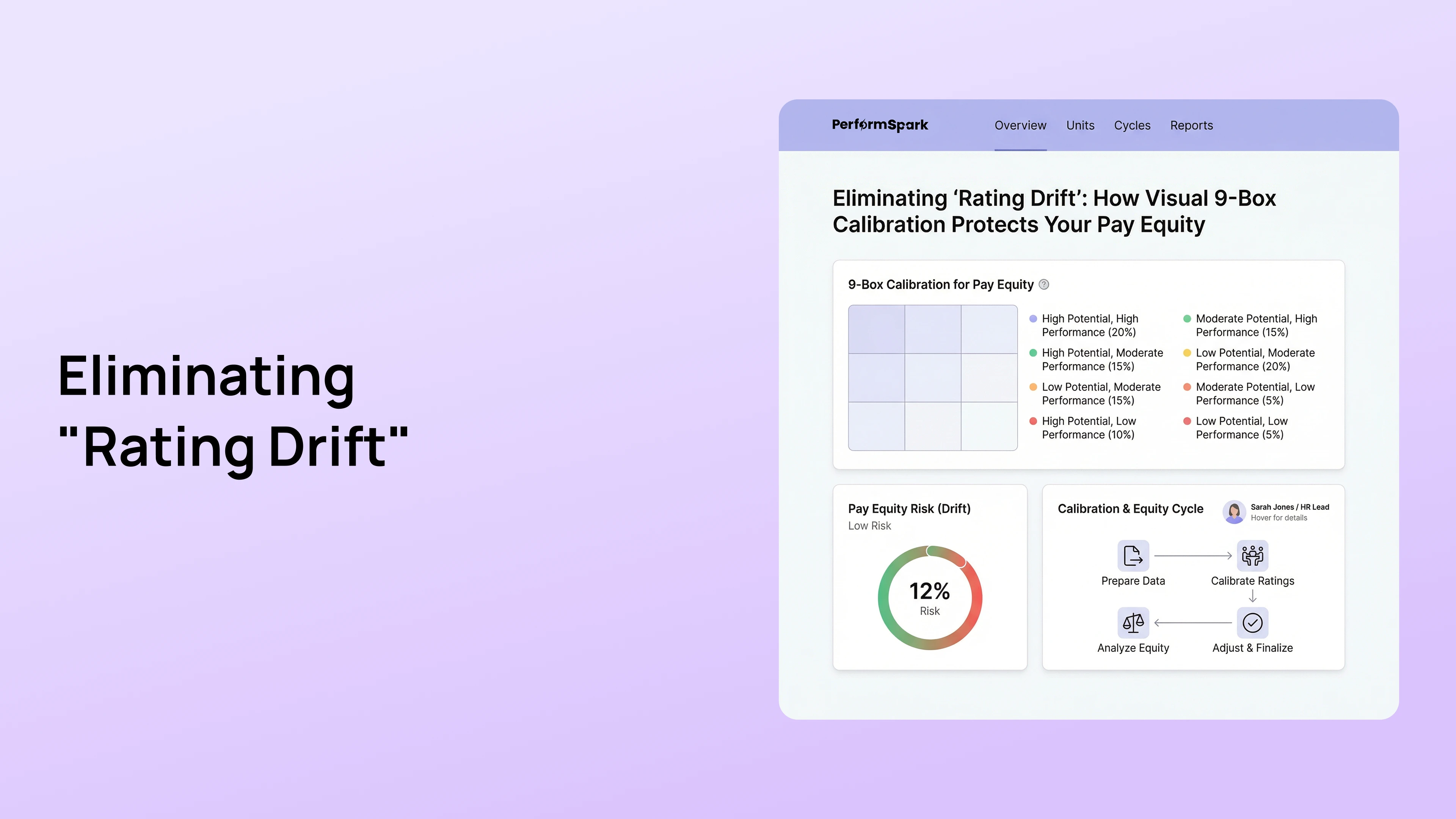
In PerformSpark, the review data flows instantly into the calibration module. You can drag and drop an employee from one box to another in the 9-Box grid, and their rating automatically updates in their review form. The data integrity is 100% maintained, ensuring that the final record matches the calibrated decision.
How does this impact the Golden Thread?
The Golden Thread is the strategic connection between Goals, Feedback, and Reviews.
The Manual Break:
A spreadsheet review asks a simple question: Did you hit your goals? The manager has to rely on their memory or ask the employee to self-report. This introduces bias and inaccuracy.
The Automated Fix:
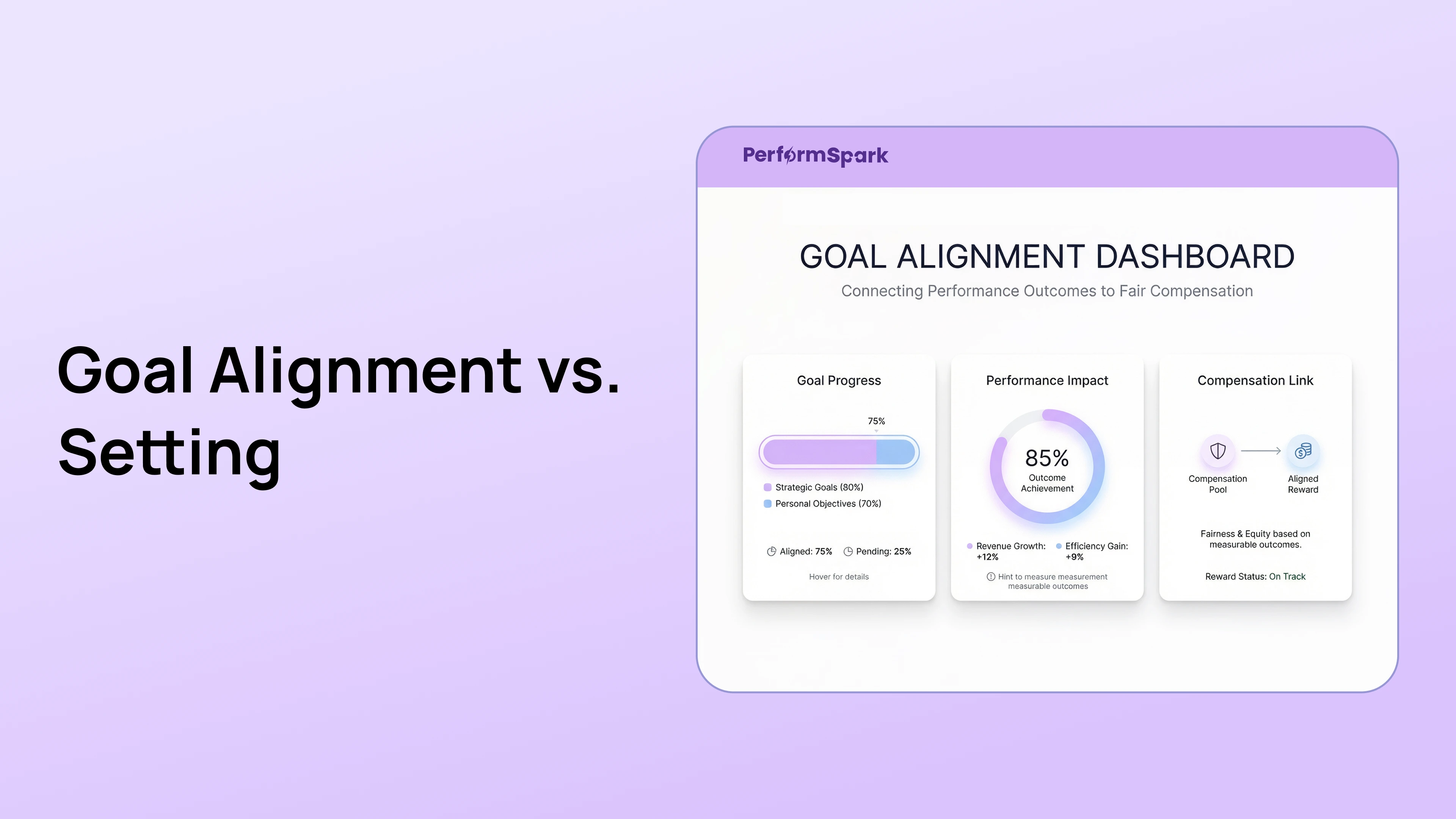
The review form in PerformSpark displays the real-time status of the employee's goals directly from the Goals Module. There is no debate about what was achieved. The data is present on the screen, allowing the conversation to focus on how the work was done, not just what was done.
How does TrAI assist in writing reviews?
Managers often procrastinate on writing reviews because they suffer from Writer's Block. They stare at the empty text box and do not know what to say. They worry about saying the wrong thing or being biased. This anxiety delays the entire cycle.
TrAI, our ethical intelligence engine, removes this friction by acting as a writing assistant.
The Summarization Assist
TrAI analyzes the last 3 to 6 months of Weekly Check-ins and automatically suggests a summary paragraph for the review.
Example: Based on check-in logs, the employee consistently reported blockers regarding Design Resources but successfully delivered the Alpha Project two weeks ahead of schedule.
This ensures that the review is based on documented history, not just recent memory.
The Tone Check
Before a manager submits a review, TrAI scans the text for potential bias or aggressive language.
Example: You used the word aggressive to describe this employee. In this context, consider using assertive or providing a specific example of the behavior to ensure clarity. This does not replace the manager's judgment. It enhances their capability, trains them to be better communicators, and speeds up the writing process by approximately 50%.
What is the ROI of switching from spreadsheets?
Many mid-market CFOs believe that spreadsheets are the cheaper option because they have no license fee. This is a false economy. Spreadsheets are costing you thousands of dollars in lost productivity and risk every single cycle.
The Admin Calculation
If your HR team spends 80 hours per cycle managing the logistics of spreadsheets (creating, sending, tracking, consolidating), and the average HR hourly rate is $50, that is **$4,000 per cycle** in pure administration cost.
The Manager Calculation
If automation saves each of your 50 managers just 2 hours of writing and administrative time per cycle, that is 100 hours of expensive leadership time returned to the business. At an average manager rate of $80/hour, that is **$8,000 in savings**.
The Total Impact
For a mid-sized company running two cycles a year, the hard cost savings of automation exceed $24,000 annually. This typically covers the entire cost of the PerformSpark software license. This means the strategic benefits such as better data, happier employees, and reduced legal risk are effectively free.
Conclusion
Spreadsheets are comfortable. They are familiar. But they are a ceiling on your organizational growth. You cannot build a high-performance culture on a tool designed for accounting.
When you switch to Automated, High-Velocity Cycles, you transform the role of the People Ops team. You stop being the Administrator who chases forms and fixes broken formulas. You become the Strategist who analyzes talent data and coaches leaders.
Don't let admin work kill your culture.
Book a Consultative Demo and see how PerformSpark helps you launch your first automated cycle in days, not months.
Why Spreadsheet Reviews Break at Scale: The Case for Automated, High-Velocity Cycles
Startups run on spreadsheets. When you are a founding team of 10 people, a simple shared document is the perfect tool for performance reviews. It is free, completely flexible, and requires zero training to use. At this stage, buying software feels like unnecessary overhead.
But every growing company eventually hits a specific ceiling. We call this the Breaking Point.
Usually occurring between 50 and 75 employees, the spreadsheet stops being an agile tool and transforms into a significant liability. HR leaders in the mid-market often cling to manual processes far past this breaking point because they fear the perceived complexity or cost of implementation. They do not realize that the hidden costs of manual administration, version control errors, and data silos are far more expensive than any software license fee.
This comprehensive guide explains exactly why manual reviews fail at scale and presents the business case for switching to Automated, High-Velocity Cycles. We will look at how the PerformSpark Strategy moves your HR team from chasing paperwork to driving strategic performance.
When does a manual review process break?
The collapse of a manual performance process is rarely a sudden explosion. It is a slow, suffocating decline of the HR function's efficiency. As headcount grows, the complexity of managing reviews via Excel or Google Sheets grows exponentially, not linearly.
What is the Version Control Trap?
In a 100-person company, a typical review cycle generates a minimum of 200 distinct documents. You have 100 self-evaluations and 100 manager evaluations. If you use spreadsheets, that means you have 200 distinct files floating in email inboxes, local hard drives, or shared cloud folders.
HR administrators often spend 40 to 60 hours per cycle just acting as traffic controllers. They must ensure every manager is using the current year's template. They must manually verify that every file has been submitted. They must rename files that were saved incorrectly. This is low-value administrative work that burns out talented People Ops professionals.
What are the hidden privacy risks?
Spreadsheets are notoriously difficult to secure in a collaborative environment. To allow a manager to see their direct reports' data, you often have to share a folder or a master sheet.
One wrong permission setting can expose sensitive compensation data or private peer feedback to the entire company.
In a manual system, there is no audit trail. If a cell is deleted or a rating is changed, there is no record of who did it or when. This lack of data integrity creates a massive compliance risk, particularly if a performance score is ever used as evidence in a wrongful termination lawsuit.
Why are data silos dangerous?
The biggest failure of the spreadsheet method is strategic. Data in a spreadsheet is dead data. It lives on an island, disconnected from the rest of the employee lifecycle.
You cannot easily cross-reference a rating in a spreadsheet with the Goal Achievement data stored in a different system. You cannot pull manual ratings into a Performance Calibration session without hours of manual formatting and data cleaning. This disconnection forces leaders to make compensation decisions based on intuition rather than holistic evidence.
What is a High-Velocity Review Cycle?
The solution to the spreadsheet problem is not just digitizing the form. It is changing the philosophy of the review itself. We advocate moving from stagnant annual reviews to High-Velocity Cycles.
A High-Velocity Cycle is faster, lighter, and more frequent. It is designed for the modern workforce that demands continuous feedback rather than a once-a-year judgment day.
The Traditional Cycle (Manual)
- Frequency: Once a year.
- Duration: 6 to 8 weeks to complete from launch to signature.
- Focus: Compliance, form filling, and risk mitigation.
- Manager Experience: High friction and high anxiety.
- Outcome: Exhaustion and outdated data.
The High-Velocity Cycle (Automated)
- Frequency: Quarterly or Bi-annual.
- Duration: 10 to 14 days to complete.
- Focus: Feedback, coaching, and future growth.
- Manager Experience: Low friction and guided prompts.
- Outcome: Actionable real-time insights.
The PerformSpark Difference:
We enable High-Velocity Cycles by removing the friction of the blank page. Because we integrate Check-in Data directly into the review workflow, the manager does not have to remember what happened 9 months ago. The review practically writes itself based on the last 12 weeks of activity.
How does automation solve the "Chasing" problem?
Ask any HR administrator what they hate most about performance reviews and they will give you the same answer: Chasing managers to finish their forms.
In a manual system, HR is forced to play the role of the Police. You send nagging emails on Monday. You slack people on Wednesday. You chase executives down in the hallway on Friday. This dynamic damages the relationship between HR and the rest of the business. You become the villain who enforces deadlines rather than the partner who builds culture.
The Nudge Engine
Automation changes this dynamic completely. The software becomes the bad guy so you do not have to be. PerformSpark's Nudge Engine handles the logistics of accountability.
- Smart Notifications: The system sends automated, personalized reminders via Slack, MS Teams, or email based on the specific deadline status of the user.
- Escalation Rules: You can configure the system to escalate issues automatically. If a manager misses a deadline by 3 days, the system can trigger a notification to their department head or VP, prompting internal accountability without HR intervention.
- Progress Dashboards: Instead of checking 50 different spreadsheets to see who is done, HR leaders have a live dashboard. You can see completion rates by department instantly (e.g., Sales is 90% complete, Engineering is 40% complete), allowing you to target your follow-up efforts where they are actually needed.
Why is disconnected data dangerous for decision making?
When you use spreadsheets, your performance data is isolated. It is a snapshot in time that has no context. This lack of context leads to bad decision-making, particularly when it comes to compensation and promotions.
Can you calibrate without integrated data?
We discussed the critical importance of fairness in our guide on Performance Calibration. To run an effective 9-Box calibration session, you need to plot Performance against Potential for every employee.
The Manual Way:
To do this in Excel, an HR analyst must manually export data from 50 different sheets, normalize the scales, and build a pivot table. If a VP decides to change a rating during the calibration meeting, the analyst must update the master sheet and then remember to go back and update the original review form. Human error is inevitable in this web of versions.
The Automated Way:
In PerformSpark, the review data flows instantly into the calibration module. You can drag and drop an employee from one box to another in the 9-Box grid, and their rating automatically updates in their review form. The data integrity is 100% maintained, ensuring that the final record matches the calibrated decision.
How does this impact the Golden Thread?
The Golden Thread is the strategic connection between Goals, Feedback, and Reviews.
The Manual Break:
A spreadsheet review asks a simple question: Did you hit your goals? The manager has to rely on their memory or ask the employee to self-report. This introduces bias and inaccuracy.
The Automated Fix:
The review form in PerformSpark displays the real-time status of the employee's goals directly from the Goals Module. There is no debate about what was achieved. The data is present on the screen, allowing the conversation to focus on how the work was done, not just what was done.
How does TrAI assist in writing reviews?
Managers often procrastinate on writing reviews because they suffer from Writer's Block. They stare at the empty text box and do not know what to say. They worry about saying the wrong thing or being biased. This anxiety delays the entire cycle.
TrAI, our ethical intelligence engine, removes this friction by acting as a writing assistant.
The Summarization Assist
TrAI analyzes the last 3 to 6 months of Weekly Check-ins and automatically suggests a summary paragraph for the review.
Example: Based on check-in logs, the employee consistently reported blockers regarding Design Resources but successfully delivered the Alpha Project two weeks ahead of schedule.
This ensures that the review is based on documented history, not just recent memory.
The Tone Check
Before a manager submits a review, TrAI scans the text for potential bias or aggressive language.
Example: You used the word aggressive to describe this employee. In this context, consider using assertive or providing a specific example of the behavior to ensure clarity. This does not replace the manager's judgment. It enhances their capability, trains them to be better communicators, and speeds up the writing process by approximately 50%.
What is the ROI of switching from spreadsheets?
Many mid-market CFOs believe that spreadsheets are the cheaper option because they have no license fee. This is a false economy. Spreadsheets are costing you thousands of dollars in lost productivity and risk every single cycle.
The Admin Calculation
If your HR team spends 80 hours per cycle managing the logistics of spreadsheets (creating, sending, tracking, consolidating), and the average HR hourly rate is $50, that is **$4,000 per cycle** in pure administration cost.
The Manager Calculation
If automation saves each of your 50 managers just 2 hours of writing and administrative time per cycle, that is 100 hours of expensive leadership time returned to the business. At an average manager rate of $80/hour, that is **$8,000 in savings**.
The Total Impact
For a mid-sized company running two cycles a year, the hard cost savings of automation exceed $24,000 annually. This typically covers the entire cost of the PerformSpark software license. This means the strategic benefits such as better data, happier employees, and reduced legal risk are effectively free.
Conclusion
Spreadsheets are comfortable. They are familiar. But they are a ceiling on your organizational growth. You cannot build a high-performance culture on a tool designed for accounting.
When you switch to Automated, High-Velocity Cycles, you transform the role of the People Ops team. You stop being the Administrator who chases forms and fixes broken formulas. You become the Strategist who analyzes talent data and coaches leaders.
Don't let admin work kill your culture.
Book a Consultative Demo and see how PerformSpark helps you launch your first automated cycle in days, not months.




.svg)

.svg)
.svg)