
.svg)





Table of Contents

Key Takeaways:
- Effective strengths and development needs describe observable work patterns, not personality traits.
- The strongest review comments connect evidence to role impact and an appropriate next step.
- Managers do not need to invent a weakness for every strength. Focus on the performance patterns that matter most.
- Development needs should become specific actions, support commitments, and progress-review dates.
- Year-round evidence and calibration help managers apply expectations more consistently.
A useful performance review gives employees a balanced view of what they do well and what they should develop next. That does not mean forcing one strength and one weakness into every competency. It means identifying the performance patterns that matter most, supporting them with evidence, and explaining what the employee should continue or change.
Strong review language focuses on observable work. Managers should use evidence from completed goals, project outcomes, customer feedback, 1-on-1 check-ins, peer input, and documented performance trends rather than relying on general impressions.
This guide provides 40 performance review strengths and weaknesses examples across 10 common competencies. The examples are written as adaptable manager comments, with strengths that explain value and development needs that include a practical next step.
What Counts as a Strength or Weakness in a Performance Review?
A performance strength is a behavior, capability, or result that the employee demonstrates consistently and that contributes meaningful value to the role, team, customer, or organization.
A performance weakness is a role-relevant behavior or outcome that is not yet consistent with expectations. It should not be a personality label. It should describe what needs to improve and provide enough clarity for the employee to take action.
For example:
- Too vague: “Jordan is a strong communicator.”
- Specific strength: “Jordan provides concise weekly project updates that identify progress, risks, decisions needed, and next steps, allowing stakeholders to respond before issues affect delivery.”
- Too vague: “Jordan needs better time management.”
- Specific development need: “Two project milestones were completed after their agreed dates this quarter. Jordan should break future projects into weekly checkpoints and raise schedule risks during manager check-ins.”
A structured performance review process makes this level of evidence easier to collect throughout the cycle instead of asking managers to reconstruct the year from memory.
40 Performance Review Strengths and Weaknesses Examples
1. Communication
Strength examples
- “Communicates project status clearly and consistently, including risks, decisions needed, owners, and next actions.”
- “Adapts communication effectively for executives, technical teams, customers, and cross-functional partners without losing essential context.”
Development need examples
- “Written updates sometimes provide data without explaining the business impact or recommended action. Future updates should include a short summary of what the information means and what decision is required.”
- “Meeting discussions occasionally move forward before all participants have confirmed understanding. The next development step is to summarize decisions and ask for confirmation before closing each topic.”
Managers can compare their observations with structured employee feedback surveys when communication patterns affect multiple stakeholders.
2. Collaboration and Teamwork
Strength examples
- “Coordinates shared responsibilities early, confirms dependencies, and gives partner teams enough notice when timelines or requirements change.”
- “Creates a respectful team environment by inviting different perspectives and responding constructively when colleagues disagree.”
Development need examples
- “Completes assigned portions of shared work reliably but does not always confirm whether teammates have what they need for the final handoff. Add a midpoint and completion check for cross-functional deliverables.”
- “Important decisions have sometimes remained in private messages rather than the shared project record. Document decisions and ownership in the agreed workspace after each discussion.”
For roles with extensive cross-functional responsibilities, 360-degree feedback can provide a broader view of collaboration than manager observation alone.
3. Leadership and People Management
Strength examples
- “Delegates work with clear expectations, decision authority, timelines, and definitions of success, allowing team members to work independently.”
- “Provides timely coaching and follows through on commitments to remove blockers, arrange resources, and support employee development.”
Development need examples
- “Check-ins with direct reports have not occurred consistently during busy periods. Restore a predictable meeting cadence and record follow-up actions for both manager and employee.”
- “Feedback is often accurate but arrives after the project is complete. Give feedback closer to the relevant event so employees have time to apply it during the work.”
Performance management tools for managers can keep coaching notes, goals, and agreed actions accessible between formal reviews.
4. Goal Achievement and Results
Strength examples
- “Consistently converts broad objectives into clear milestones and completes high-priority work within the agreed scope and timeline.”
- “Maintains focus on business outcomes and adjusts the execution plan when evidence shows that the original approach will not achieve the intended result.”
Development need examples
- “Several goals expanded in scope without a corresponding update to the deadline or resource plan. Confirm scope changes with the manager before committing additional work.”
- “Progress risks are sometimes reported only when a deadline is close. Provide a brief weekly update on goal status, blockers, and confidence level.”
Connecting reviews to goal management gives managers a clearer record of progress, changes, and results across the review period.
5. Problem Solving and Decision Making
Strength examples
- “Defines the underlying problem before recommending a solution and uses relevant evidence to compare available options.”
- “Recognizes when a decision can be made independently and when the potential customer, financial, or operational impact requires escalation.”
Development need examples
- “Moves quickly into solution mode before confirming the root cause. Use a structured problem statement and validate the issue with affected stakeholders before selecting an approach.”
- “Decisions are made thoughtfully, but the rationale and next steps are not always communicated to everyone affected. Close each decision with an owner, deadline, and documented summary.”
A centralized performance reporting and analytics view helps managers distinguish isolated events from recurring decision-making patterns.
6. Time Management and Prioritization
Strength examples
- “Prioritizes high-impact work effectively and communicates early when competing requests require a manager decision.”
- “Breaks complex projects into manageable milestones and protects focused time for work requiring sustained attention.”
Development need examples
- “Accepts new requests without confirming how they affect existing commitments. Review priorities with the manager before agreeing to additional deadlines.”
- “Large assignments are sometimes tracked only against the final due date. Create interim checkpoints and raise any delay risk before the next milestone.”
Automated performance reminders can support follow-through on goals, check-ins, and development commitments without repeated manual follow-up from HR.
7. Quality and Attention to Detail
Strength examples
- “Produces accurate, complete work that follows team standards and rarely requires correction after submission.”
- “Reviews customer-facing and high-impact deliverables carefully, checking supporting data, formatting, assumptions, and required approvals.”
Development need examples
- “Recent submissions have required corrections for missing context and incomplete supporting information. Use the team quality checklist before submitting future work.”
- “Work is accurate when planned in advance, but quality declines on urgent requests. Confirm the minimum required standard and request peer review for time-sensitive, high-impact deliverables.”
When quality improvements become consistent, timely employee recognition can reinforce the behavior and demonstrate that progress is noticed.
8. Adaptability and Change
Strength examples
- “Responds constructively when priorities change, reassesses the plan, and communicates the impact to dependent stakeholders.”
- “Learns new tools and processes quickly and helps colleagues understand how the change affects their work.”
Development need examples
- “Continues using the previous process after updated guidance has been introduced. Review new instructions before beginning the next deliverable and ask for clarification where needed.”
- “Adjusts execution when priorities change but does not always update affected stakeholders. Include a communication step in the change-response checklist.”
Meaningful development priorities can be documented in an individual development plan with clear actions, support, milestones, and review dates.
9. Initiative and Accountability
Strength examples
- “Identifies potential risks early and brings the manager or project owner a practical recommendation rather than reporting the issue alone.”
- “Takes ownership through completion, including coordination, handoff, stakeholder confirmation, and follow-up on unresolved actions.”
Development need examples
- “Recognizes problems but occasionally waits for the manager to raise them. Flag risks to delivery, quality, or stakeholder expectations within one business day of identifying them.”
- “Begins valuable work outside the original scope without confirming priorities or resource implications. Discuss proposed additional work before committing significant time.”
Managers can use the areas of improvement examples for more development-focused comments with measurable next steps.
10. Learning and Professional Development
Strength examples
- “Actively seeks feedback, identifies the lesson, and applies it visibly to subsequent projects.”
- “Builds role-relevant knowledge and transfers learning into practical improvements in quality, speed, customer experience, or team capability.”
Development need examples
- “Completes learning activities but does not consistently apply the new skill to current work. Select one live assignment where the skill will be practiced and reviewed.”
- “Development goals have remained broad and difficult to measure. Choose one priority capability, define the expected behavior, and agree on a progress checkpoint.”
Employees preparing their own perspective can use the self-appraisal comments examples to describe strengths and development needs with evidence and ownership.
How to Write a Balanced Strengths and Weaknesses Summary
A balanced review summary should not read like two disconnected lists. It should explain the employee's overall performance pattern.
- Begin with the most important strengths. Identify the capabilities or results that create the greatest value in the employee's current role.
- Support each point with evidence. Reference projects, outcomes, goals, feedback, or recurring behavior from the review period.
- Prioritize development needs. Select one or two areas that would materially improve current performance or prepare the employee for the next level.
- Define the next step. Agree on the action, support, owner, and date when progress will be reviewed.
- Confirm understanding. Allow the employee to provide context and summarize what both parties agreed to do.
Managers looking for more rating-specific wording can use the performance review examples and phrases page, which organizes manager comments by performance level.
Avoid Creating False Balance
Not every high-performing employee needs a serious weakness added simply to make the review appear balanced. A development priority may be a next-level capability rather than a current performance failure.
For example, an experienced individual contributor may consistently meet every current role requirement but need more experience influencing cross-functional decisions before moving into leadership. The development need is preparation for broader responsibility, not evidence that the employee is underperforming.
Similarly, an employee with several performance gaps should not receive generic praise that obscures the seriousness of the issue. Recognize genuine strengths, but keep the review clear about essential expectations that are not being met.
Turn Weaknesses Into Development Commitments
Normal development needs should flow into a goal, coaching plan, or IDP. The manager and employee should agree on:
- The behavior or outcome expected
- The action the employee will take
- The support the manager or organization will provide
- The evidence that will demonstrate progress
- The date progress will be reviewed
When an employee is not meeting essential role requirements and a formal intervention is necessary, HR may determine that a performance improvement plan is appropriate. A normal development need and a formal PIP are not interchangeable.
Use Calibration to Check Consistency
Before ratings are finalized, a structured performance calibration process can help HR and leaders compare evidence, question inconsistent standards, and identify vague or unsupported conclusions.
Calibration should not replace manager judgment. It should test whether similar performance is being described and rated consistently across teams. A connected performance management platform makes that comparison easier by bringing goals, feedback, review comments, and rating distributions into the same workflow.
Collect Evidence Throughout the Review Cycle
Review quality improves when managers document performance throughout the year. Use regular check-ins, goal updates, feedback, recognition, and project outcomes to build a reliable record.
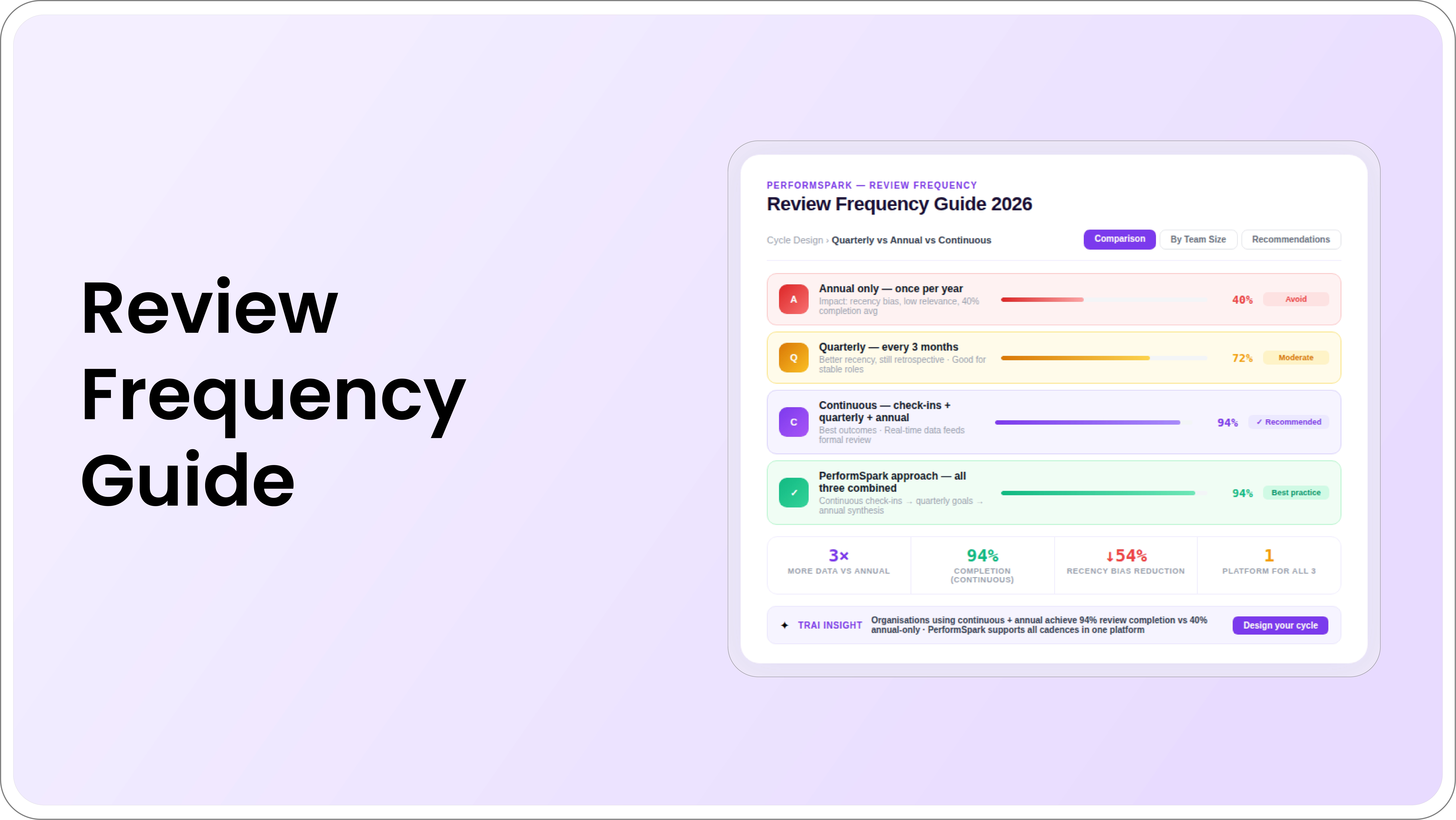
The appropriate review schedule will vary by organization. The performance review frequency guide explains how annual, mid-year, quarterly, and continuous conversations can work together without creating unnecessary administrative work.
Write Clearer, More Consistent Reviews With PerformSpark
PerformSpark connects performance reviews with goals, check-ins, feedback, development plans, calibration, and reporting. Managers gain the context needed to write specific reviews, while HR gains a consistent process across teams.
Explore PerformSpark pricing or book a personalized demo to see how the platform supports balanced, evidence-based performance conversations.



.svg)

.svg)
.svg)