

Table of Content
The Talent Strategy Playbook: How to Operationalize HR for High-Velocity Teams
The phrase "Talent Strategy" is broken.
In most companies, it is a buzzword used to describe a collection of disconnected administrative tasks. You run an annual engagement survey. You mandate a yearly performance review. You ask managers to set goals in January.
That is not a strategy. That is compliance.
A true strategy dictates how your company operates daily. It aligns human effort with financial targets. If your HR initiatives do not change how your engineering team behaves on a Tuesday morning, those initiatives have failed.
At PerformSpark, we believe the future of HR is not administration. It is operational velocity.
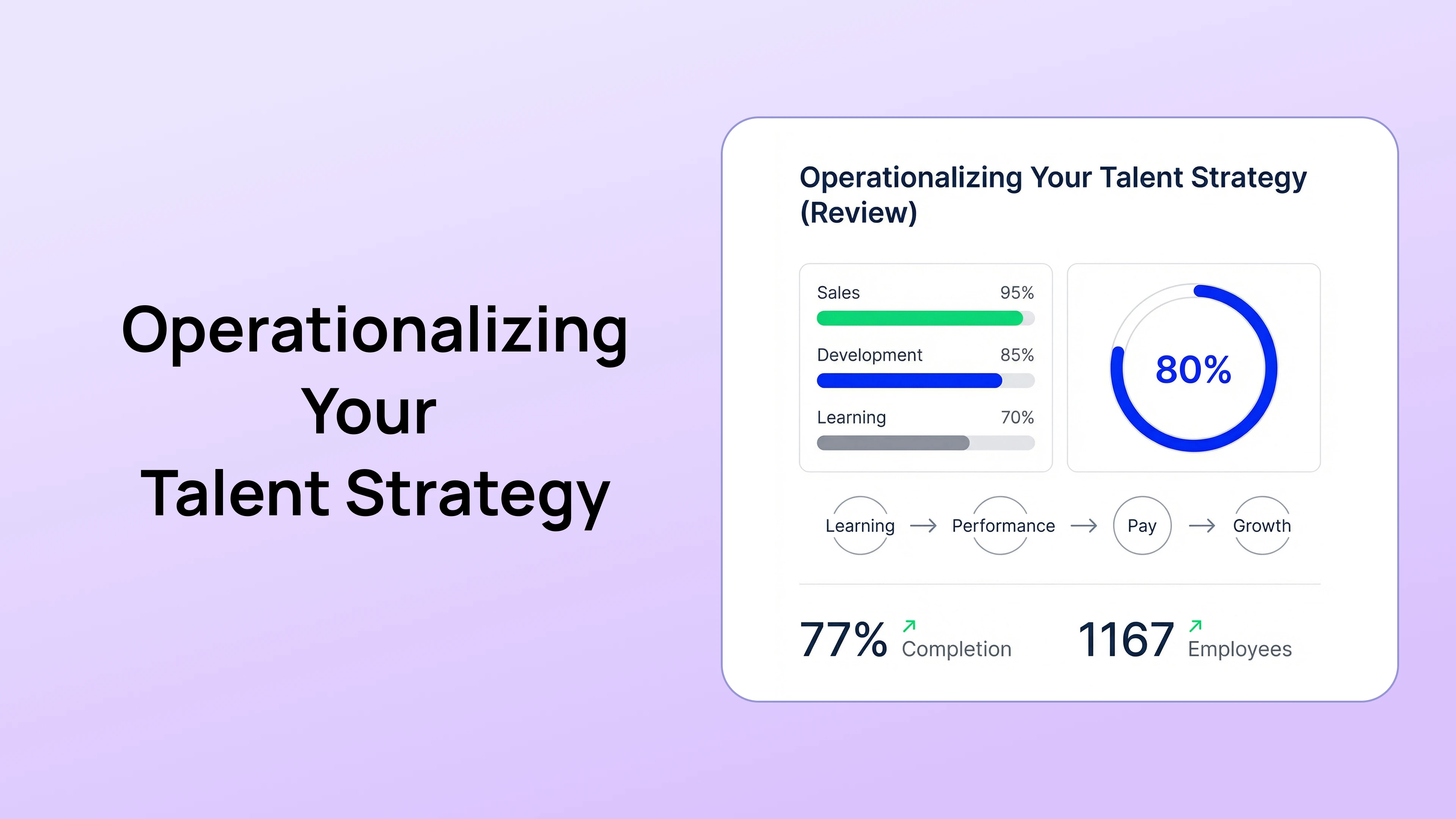
This playbook is the definitive roadmap for transitioning your HR department from a cost center into a revenue enabling machine. It synthesizes the core principles of high-performance management into a deployable framework you can implement this quarter.
The Core Problem: The Execution Gap
Most HR leaders know what good management looks like. The failure is rare in theory. The failure is in the execution.
You buy new software and train your leaders, but within a month, everyone reverts to their old habits. Managers go back to keeping secret performance notes in Excel. Goal setting becomes a box-checking exercise.
This happens because the HR tech stack creates friction. If a process is hard to use, a manager will ignore it. To operationalize your talent strategy, you must ruthlessly eliminate administrative friction and replace it with integrated habits.
Here is the four-pillar framework to make that happen.
Pillar 1: Architect a High-Velocity Feedback Loop
The industrial-era performance review is mathematically flawed. It relies on manager memory and is corrupted by recency bias. If you wait twelve months to correct an employee's trajectory, you have wasted a year of payroll.
To build a high-velocity team, you must treat feedback like software development. You must iterate continuously.
Shifting from Judgment to Coaching
Instead of judging past performance, managers must coach future execution. This requires shifting to a Continuous Feedback Strategy.
However, continuous feedback only works if your culture supports radical candor. You must train your managers on the difference between being nice and being effective. True Psychological Safety means an employee feels secure enough to hear hard truths without fear of retaliation.
Give your managers the exact words to say. Arm them with specific Feedback Scripts so they can address boredom, burnout, and underperformance the moment it appears, rather than waiting for the quarterly review.
Pillar 2: Move from Static Goals to Agile Commitments
Objectives and Key Results (OKRs) are the operating systems of top-tier companies. Yet, 60% of OKR implementations fail.
They fail because companies treat goals as static documents. They fall into the "Cascading Trap," where goal setting takes six weeks to trickle down from the CEO to the frontline worker.
The Bottom-Up Alignment Model
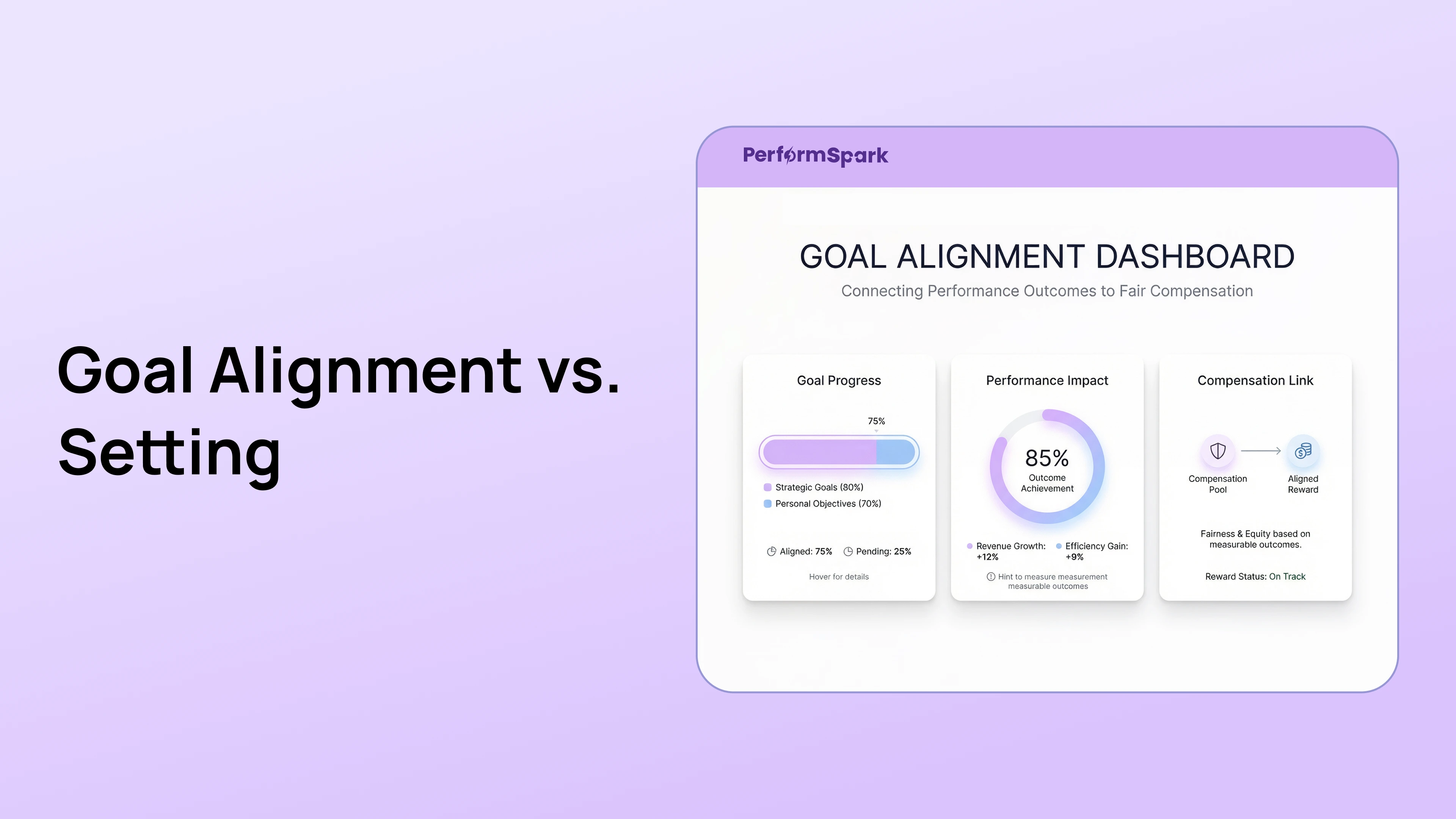
You must stop cascading and start aligning. As detailed in our analysis of the OKR Failure Rate, teams must set their goals concurrently based on visible company themes.
Furthermore, you must respect the operational differences between your departments. A massive mistake is forcing every team into the exact same goal template. Engineering vs Sales Goals require different methodologies. Sales needs binary quotas. Engineering needs probabilistic milestones.
The Weekly Ritual
To ensure goals drive daily behavior, you must kill the traditional status update meeting. Replace it with The Monday Commitment. This 15-minute ritual forces employees to publicly commit to one specific outcome that moves the needle on their quarterly OKR, bridging the gap between high-level strategy and daily execution.
Pillar 3: Quantify the ROI of Talent
To secure the budget and executive buy-in required to execute this playbook, you must stop talking about "culture" and start talking about "cash."
The Cost of Inaction
Bad managers are not just a cultural liability. They are a financial drain. You must learn to calculate the Cost of the Bad Manager. When you show the CFO that a single toxic leader is costing the company hundreds of thousands of dollars in replacement fees and lost productivity, manager enablement becomes an urgent financial priority.
Predictive Retention
Stop relying on lagging indicators like the annual engagement survey. By the time the scores drop, the talent has already left.
You must transition to a continuous listening strategy. Learn to spot the Silent Metrics of Turnover, such as calendar withdrawal and stagnant goal updates.
When you can predict resignations before they happen, you build an undeniable Business Case for HR Software that any CFO will approve.
Pillar 4: Protect the Infrastructure
The final step in operationalizing your talent strategy is defending the system against internal risks.
Neutralizing Toxic Output
The ultimate test of your culture is what you tolerate. If you allow a top-performing engineer or salesperson to abuse their peers, you destroy your organizational velocity. You must deploy a framework to manage or exit the Brilliant Jerk before they drive your best people away.
Securing Data and Adopting AI
You must protect your data infrastructure. Decentralized manager spreadsheets create massive legal and GDPR liabilities. You must eliminate the Shadow HR Problem by providing tools that are actually faster and easier for managers to use than a Google Sheet.
As part of this technological upgrade, you must safely integrate artificial intelligence. Generic AI tools pose severe data privacy risks. You must deploy specialized HR intelligence, understanding the critical differences between TrAI vs ChatGPT, to give your managers writing assistance without leaking sensitive employee data.
Conclusion
Execution is your only true differentiator.
Your competitors have access to the exact same talent pool that you do. The company that wins will be the company that best aligns that talent to their strategic objectives.
A modern talent strategy roadmap is not a PDF that lives in a shared drive. It is a living, operational cadence. It dictates how your company communicates, how it measures success, and how it protects its culture.
Stop playing administrative defense. Start playing operational offense.
Book a Consultative Demo and let our implementation experts help you operationalize this exact playbook inside the PerformSpark platform today.
The Talent Strategy Playbook: How to Operationalize HR for High-Velocity Teams
The phrase "Talent Strategy" is broken.
In most companies, it is a buzzword used to describe a collection of disconnected administrative tasks. You run an annual engagement survey. You mandate a yearly performance review. You ask managers to set goals in January.
That is not a strategy. That is compliance.
A true strategy dictates how your company operates daily. It aligns human effort with financial targets. If your HR initiatives do not change how your engineering team behaves on a Tuesday morning, those initiatives have failed.
At PerformSpark, we believe the future of HR is not administration. It is operational velocity.
This playbook is the definitive roadmap for transitioning your HR department from a cost center into a revenue enabling machine. It synthesizes the core principles of high-performance management into a deployable framework you can implement this quarter.
The Core Problem: The Execution Gap
Most HR leaders know what good management looks like. The failure is rare in theory. The failure is in the execution.
You buy new software and train your leaders, but within a month, everyone reverts to their old habits. Managers go back to keeping secret performance notes in Excel. Goal setting becomes a box-checking exercise.
This happens because the HR tech stack creates friction. If a process is hard to use, a manager will ignore it. To operationalize your talent strategy, you must ruthlessly eliminate administrative friction and replace it with integrated habits.
Here is the four-pillar framework to make that happen.
Pillar 1: Architect a High-Velocity Feedback Loop
The industrial-era performance review is mathematically flawed. It relies on manager memory and is corrupted by recency bias. If you wait twelve months to correct an employee's trajectory, you have wasted a year of payroll.
To build a high-velocity team, you must treat feedback like software development. You must iterate continuously.
Shifting from Judgment to Coaching
Instead of judging past performance, managers must coach future execution. This requires shifting to a Continuous Feedback Strategy.
However, continuous feedback only works if your culture supports radical candor. You must train your managers on the difference between being nice and being effective. True Psychological Safety means an employee feels secure enough to hear hard truths without fear of retaliation.
Give your managers the exact words to say. Arm them with specific Feedback Scripts so they can address boredom, burnout, and underperformance the moment it appears, rather than waiting for the quarterly review.
Pillar 2: Move from Static Goals to Agile Commitments
Objectives and Key Results (OKRs) are the operating systems of top-tier companies. Yet, 60% of OKR implementations fail.
They fail because companies treat goals as static documents. They fall into the "Cascading Trap," where goal setting takes six weeks to trickle down from the CEO to the frontline worker.
The Bottom-Up Alignment Model
You must stop cascading and start aligning. As detailed in our analysis of the OKR Failure Rate, teams must set their goals concurrently based on visible company themes.
Furthermore, you must respect the operational differences between your departments. A massive mistake is forcing every team into the exact same goal template. Engineering vs Sales Goals require different methodologies. Sales needs binary quotas. Engineering needs probabilistic milestones.
The Weekly Ritual
To ensure goals drive daily behavior, you must kill the traditional status update meeting. Replace it with The Monday Commitment. This 15-minute ritual forces employees to publicly commit to one specific outcome that moves the needle on their quarterly OKR, bridging the gap between high-level strategy and daily execution.
Pillar 3: Quantify the ROI of Talent
To secure the budget and executive buy-in required to execute this playbook, you must stop talking about "culture" and start talking about "cash."
The Cost of Inaction
Bad managers are not just a cultural liability. They are a financial drain. You must learn to calculate the Cost of the Bad Manager. When you show the CFO that a single toxic leader is costing the company hundreds of thousands of dollars in replacement fees and lost productivity, manager enablement becomes an urgent financial priority.
Predictive Retention
Stop relying on lagging indicators like the annual engagement survey. By the time the scores drop, the talent has already left.
You must transition to a continuous listening strategy. Learn to spot the Silent Metrics of Turnover, such as calendar withdrawal and stagnant goal updates.
When you can predict resignations before they happen, you build an undeniable Business Case for HR Software that any CFO will approve.
Pillar 4: Protect the Infrastructure
The final step in operationalizing your talent strategy is defending the system against internal risks.
Neutralizing Toxic Output
The ultimate test of your culture is what you tolerate. If you allow a top-performing engineer or salesperson to abuse their peers, you destroy your organizational velocity. You must deploy a framework to manage or exit the Brilliant Jerk before they drive your best people away.
Securing Data and Adopting AI
You must protect your data infrastructure. Decentralized manager spreadsheets create massive legal and GDPR liabilities. You must eliminate the Shadow HR Problem by providing tools that are actually faster and easier for managers to use than a Google Sheet.
As part of this technological upgrade, you must safely integrate artificial intelligence. Generic AI tools pose severe data privacy risks. You must deploy specialized HR intelligence, understanding the critical differences between TrAI vs ChatGPT, to give your managers writing assistance without leaking sensitive employee data.
Conclusion
Execution is your only true differentiator.
Your competitors have access to the exact same talent pool that you do. The company that wins will be the company that best aligns that talent to their strategic objectives.
A modern talent strategy roadmap is not a PDF that lives in a shared drive. It is a living, operational cadence. It dictates how your company communicates, how it measures success, and how it protects its culture.
Stop playing administrative defense. Start playing operational offense.
Book a Consultative Demo and let our implementation experts help you operationalize this exact playbook inside the PerformSpark platform today.




.svg)

.svg)
.svg)